
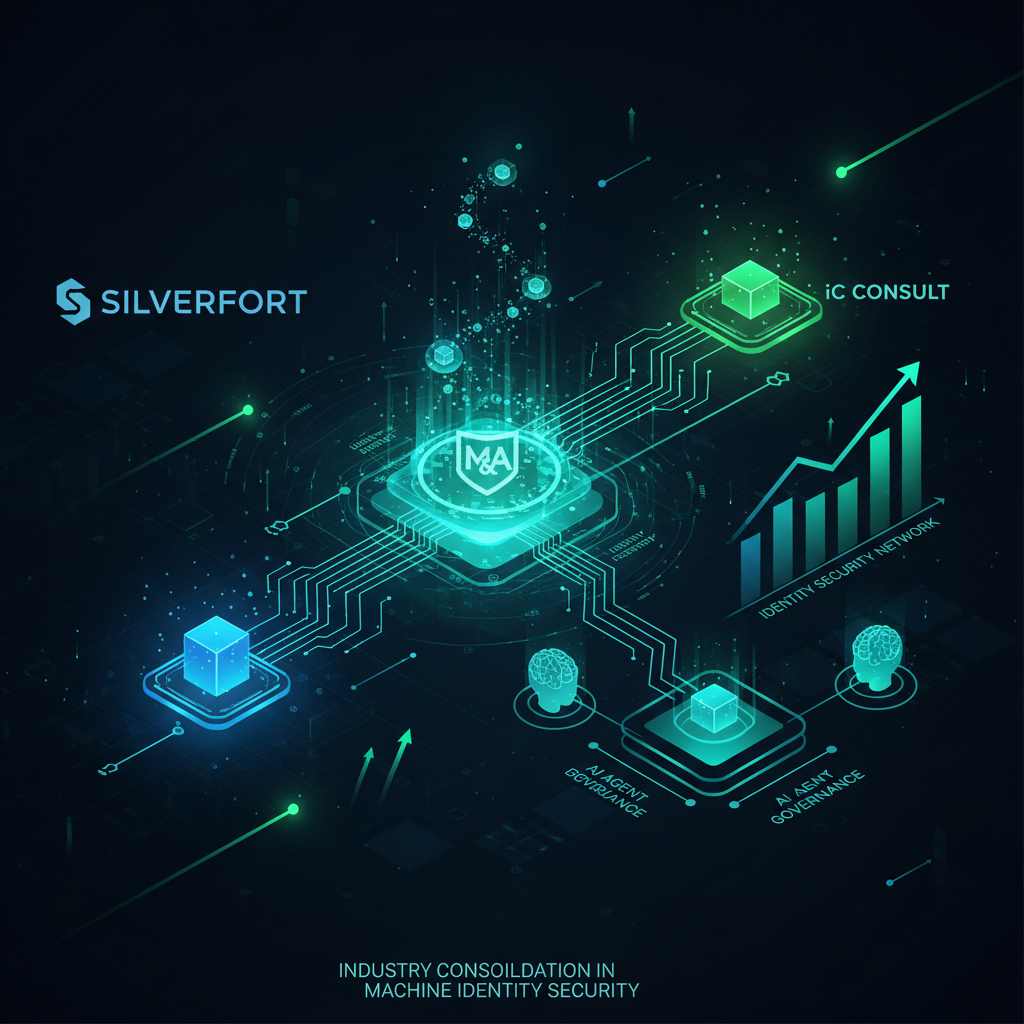
The surge of M&A activity in machine identity and AI agent security is not coincidental. It reflects a fundamental realization across the security industry: non-human identity governance is becoming a market-defining category, and the consolidation happening now will determine which vendors own that space for the next decade.
Silverforts recent funding and iC Consults strategic positioning are case studies in how traditional IAM vendors are adapting to the reality of agentic identity. But the broader trend — the concentration of investment capital, the emergence of specialist machine identity vendors, the integration of agentic capabilities into broader IAM platforms — signals that the market has inflected.
Why M&A Signals Market Maturity
Early-stage markets are characterized by greenfield startups. Mature markets are characterized by consolidation. The surge of M&A in machine identity security suggests the market is transitioning from “nice-to-have” experimental phase to “table-stakes” operational requirement. Large enterprises are building machine identity programs, they are deploying them at scale, and they are running into architectural gaps that startups have identified and specialized solutions address.
When enterprises deploy AI agents at scale, they discover that legacy IAM platforms do not support what they need: fine-grained permission models for ephemeral identities, real-time revocation at API speed, cryptographic proof of machine identity. Specialist vendors like Silverfort have built solutions specifically addressing these gaps. Now, larger IAM platforms are acquiring these specialists to bolster their own agentic identity capabilities.
The Strategic Imperative: Control the Identity Layer
Identity is the control plane of modern infrastructure. Whoever controls identity controls access to the most sensitive operations: database reads, API calls, service-to-service interactions. As AI agents proliferate, the stakes of identity compromise rise exponentially. An attacker with control of a single human account affects that humans access. An attacker with control of an AI agents identity can automate operations at scale, potentially affecting thousands of downstream systems.
Large platform vendors understand this. They are acquiring machine identity specialists not just to add features, but to ensure that agentic identity is built into the core of their platforms rather than bolted on as an afterthought. The vendors who own the machine identity layer will be the ones CISOs must trust with their AI agent governance.
What This Means for Buyers
Organizations evaluating identity platforms should interpret M&A activity as a signal of strategic direction. If a major platform vendor acquires a machine identity specialist, it signals that vendor is serious about agentic identity governance. Conversely, if a vendor has not acquired or built machine identity capabilities, it is falling behind the markets expectations.
The companies that have invested in machine identity governance early — building private PKI, implementing zero-trust for service-to-service interactions, establishing continuous verification for AI agents — will have a structural advantage when compliance requirements emerge and audits become mandatory. Those organizations will be the case studies other enterprises benchmark against.
Non-human identity is no longer a fringe concern. The M&A activity in this space is a market speaking loudly: agentic identity governance is the next frontier of enterprise security, and the competition for solutions is intensifying.
Source: Biometric Update