
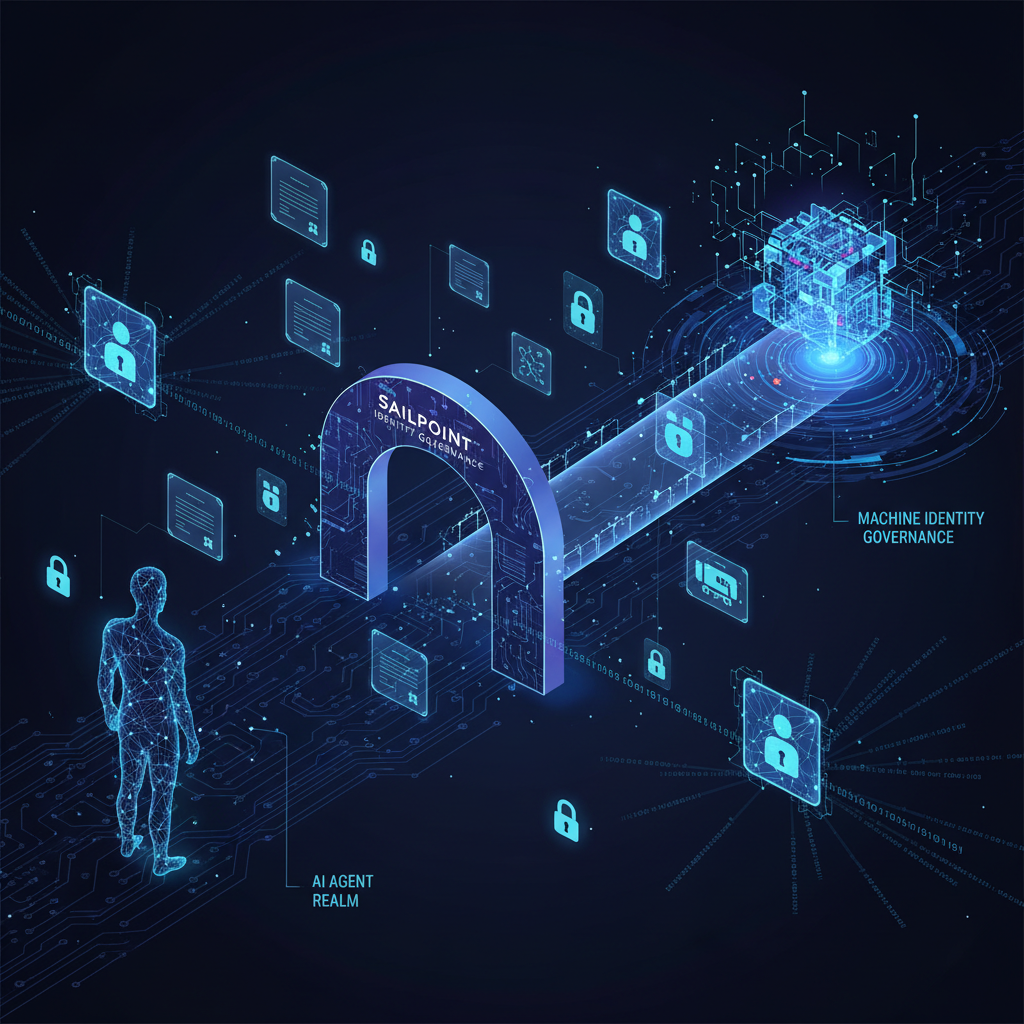
SailPoint Identity Governance Expands to Protect AI Agents and Non-Human Identities
As artificial intelligence agents proliferate across enterprise networks, organizations face a critical identity management challenge. These autonomous systems operate with their own credentials, API keys, and service accounts—collectively known as non-human identities (NHI)—yet traditional identity governance platforms were designed exclusively for human users. SailPoint’s latest update bridges this gap, extending industry-leading identity governance capabilities to machine identity environments.
The problem is straightforward but urgent: AI agents must make rapid decisions and execute tasks autonomously, often with elevated permissions. Unlike humans who authenticate once and maintain a session, agents continuously exchange credentials, interact with multiple systems, and escalate privileges as needed. This creates an expansive attack surface. Adversaries can compromise a single agent, pivot across services, and gain lateral movement through inherited permissions.
SailPoint’s governance extension tackles three core challenges:
Credential Lifecycle Management. AI agents demand just-in-time access to specific resources for finite periods. SailPoint now enables automated provisioning, rotation, and deprovisioning of machine identities—ensuring agents never retain unnecessary permissions. This eliminates standing privileges, a primary vector for privilege escalation attacks.
Access Certification and Attestation. Machine identity governance requires continuous verification that each agent’s permissions remain justified. SailPoint extends certification workflows to non-human identities, allowing security teams to regularly review, approve, or revoke agent access. This creates an auditable trail—essential for compliance and breach investigation.
Agentic Identity Visibility and Provisioning. Organizations now gain unified visibility into all machine identities across their infrastructure. SailPoint’s framework integrates with cloud platforms, Kubernetes, container registries, and API management systems—providing a single control plane for both human and non-human identity governance.
This alignment represents a fundamental shift. Non-human identity security is no longer an add-on afterthought; it’s now a native capability within enterprise identity governance architecture. As AI agents become production-critical, governance parity between human and machine identities is essential to prevent them from becoming lateral movement superhighways.
Source: SailPoint / TechInformed