
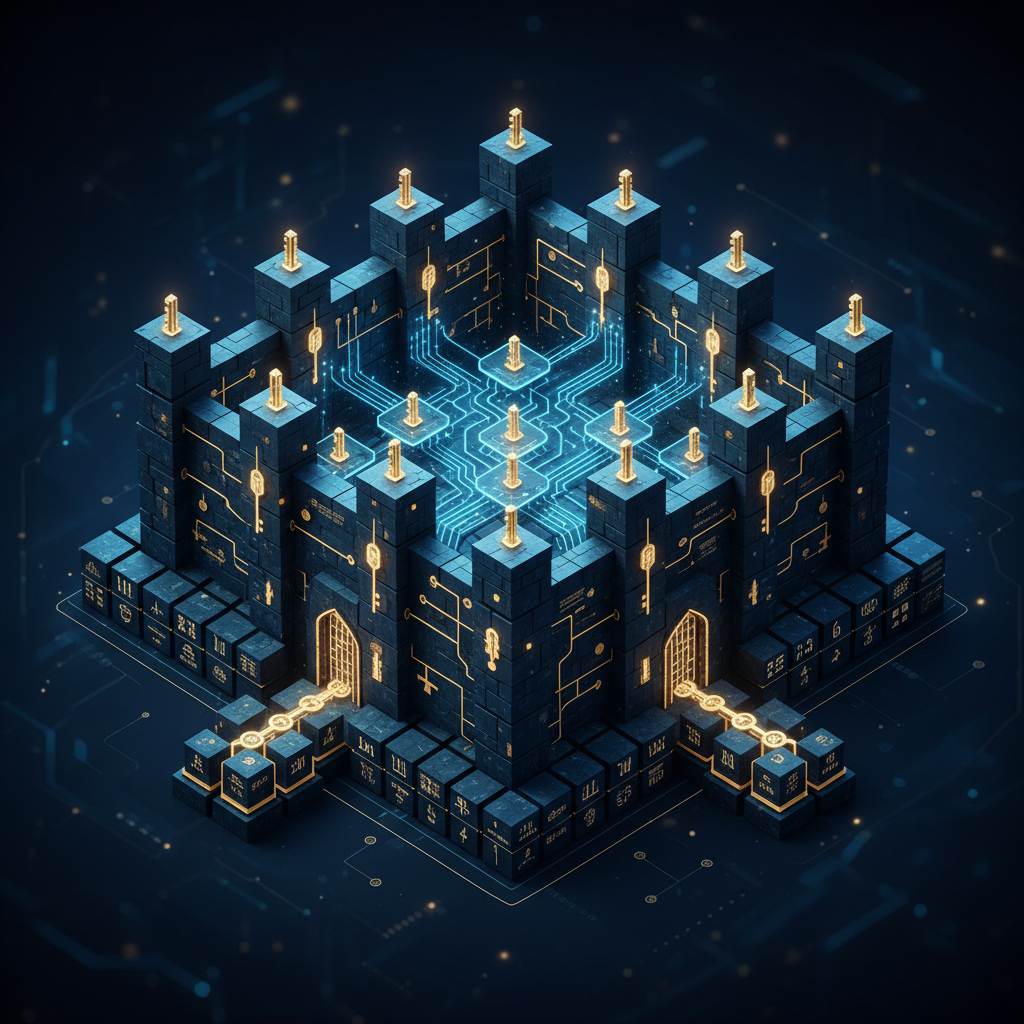
The foundation of modern machine identity security is not API keys, service account passwords, or temporary tokens. It is private Public Key Infrastructure — a cryptographic system that can issue, manage, and revoke digital certificates at scale, with millisecond latency and forensic-grade auditability. Yet most organizations have not deployed private PKI, relying instead on legacy credential stores that were designed for human users, not for the massive scale of agentic identity.
A private PKI is fundamentally different from the public web PKI. It is not subject to browser trust stores or Certificate Authorities governed by Mozilla or Google. It is an organizations own cryptographic root of trust — a system that can encode identity, permissions, and context directly into the certificate itself, signed by keys that only the organization controls.
Why Certificates Are Superior to Keys and Passwords
An API key is static. Once issued, it cannot be revoked without coordination across all services that use it. A certificate, by contrast, has an expiration time built in. An organization can issue 1-hour certificates for AI agent identities, eliminating the risk of long-lived credentials being stolen. More importantly, certificates can encode metadata: which microservice this agent is authorized to call, for how long, under what conditions. The machine identity is not just a credential — it is a statement of intent.
Passwords and API keys cannot express context. A certificate can. A machine identity can present a certificate that says: “I am the batch processing agent for the accounts team, authorized to read the customer database between 2am and 4am UTC, but not to write or delete.” This level of granularity is impossible with flat API key strings.
The Challenge: Certificates at Machine Scale
The reason most organizations have not deployed private PKI is operational complexity. Certificates require renewal. They expire. They need versioning. In a human-scale system, managing certificates is a quarterly operational process. But in a machine identity system where thousands of AI agents are spun up and destroyed daily, certificate management becomes a continuous, automated process. This requires tooling that was not common in traditional infrastructure: automated certificate issuance, lifecycle management, and revocation — all at API speed.
Furthermore, the private PKI must be distributed. If all certificate validation happens at a single point, that point becomes a bottleneck and a single point of failure. The architecture must support edge validation — where service-to-service trust is established using certificates that can be verified locally, without consulting a central authority.
Agentic Identity Demands Cryptographic Proofs
As AI agents take on increasingly critical roles in business operations, the stakes of identity compromise rise. A compromised human user affects that users access. A compromised AI agent can affect all downstream operations that depend on it. The only way to provide sufficient cryptographic assurance is to implement identity as cryptographic proof — certificates that can be instantly revoked, updated, or rotated without human intervention.
Organizations building non-human identity infrastructure at scale should treat private PKI as infrastructure, not as a feature. It is the cryptographic foundation upon which all other machine identity controls rest. Without it, organizations are trying to secure agentic identity with 1990s-era credential models, and that will fail.
Source: Security Boulevard