
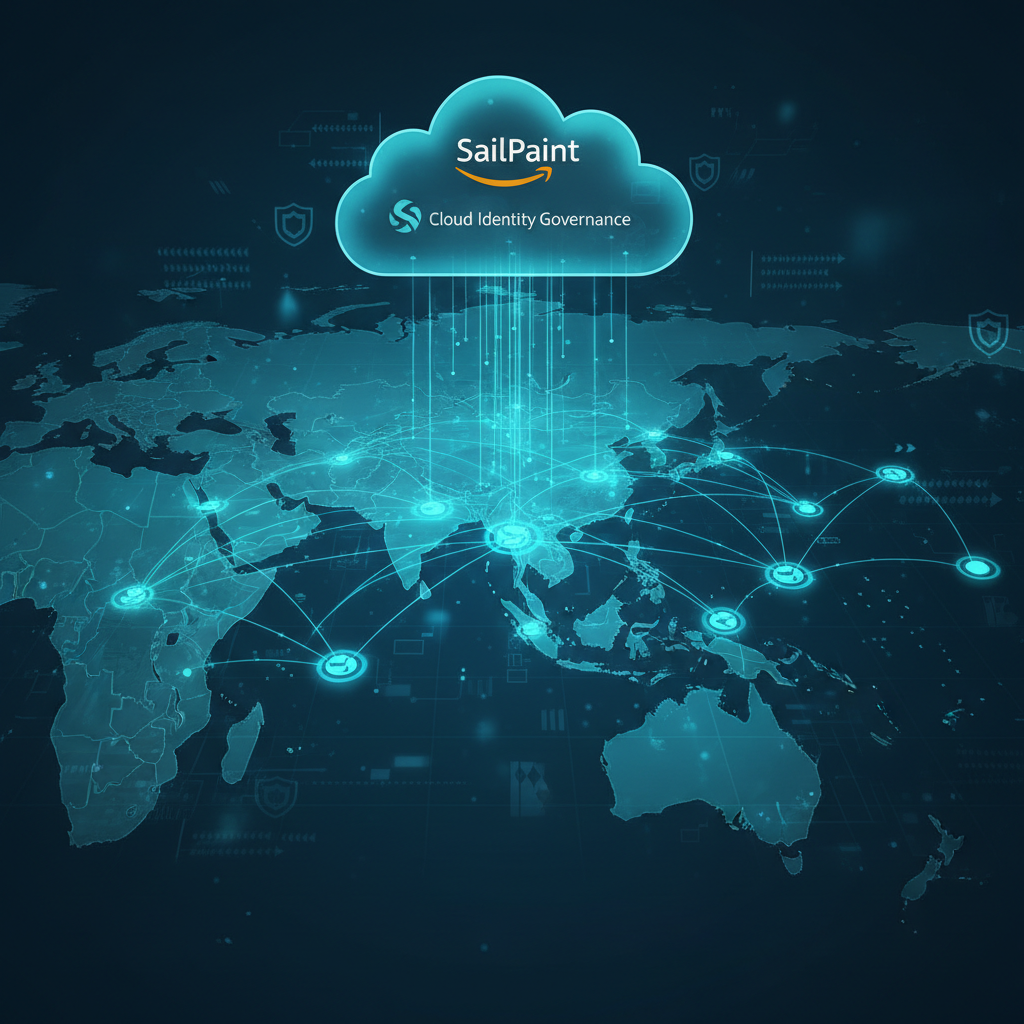
The Asia-Pacific region is experiencing a paradox. Cloud adoption is accelerating, workforces are increasingly distributed, and enterprise applications are proliferating across AWS, Azure, and hybrid environments. Yet identity governance and administration (IGA) frameworks built for on-premises, centralised networks struggle in this new reality. SailPoint’s positioning in APAC with AWS integration reflects a critical market realisation: AI adoption cannot be secure without robust identity governance infrastructure beneath it.
For CISOs and security practitioners in the region, the convergence of AI expansion and identity sprawl represents both an opportunity and an urgent challenge.
The APAC Identity Governance Imperative
Asia-Pacific enterprises face unique identity challenges. Multi-country deployments require compliance with fragmented regulatory frameworks: PDPA in Singapore, GDPR-adjacent rules in Australia, MTCS in Malaysia. Workforce models range from permanent employees to contractors and offshore teams. Cloud infrastructure spans multiple hyperscalers and regions. This complexity creates a governance burden that manual processes cannot sustain.
Identity lifecycle management in APAC is particularly challenging because it must account for regional variations in access control policy. A single enterprise might need different segregation of duties rules across different jurisdictions, different provisioning workflows for different employment categories, and different audit requirements across regions. IGA platforms that integrate tightly with cloud infrastructure — particularly AWS, which dominates APAC cloud adoption — can enforce these regional governance policies at scale.
SailPoint’s AWS integration addresses this directly. By positioning identity governance as native to the cloud infrastructure layer, the platform ensures that identity controls follow workloads. When applications migrate to AWS in APAC regions, the governance policies migrate with them. Entitlements remain auditable, access reviews remain feasible, and compliance obligations remain satisfiable even as infrastructure topology changes.
AI Adoption and Identity Governance Risk
The second layer of SailPoint’s APAC positioning concerns AI security. As organisations deploy AI systems — predictive analytics, recommendation engines, agentic AI workloads — those systems require access to enterprise data and APIs. Without proper identity governance, AI systems become identity sprawl vectors: their access accumulates without oversight, their entitlements exceed their operational requirements, and their credential management becomes opaque.
Identity governance administration prevents this. By bringing AI agent entitlements under the same governance discipline applied to human users — access certification, least-privilege enforcement, temporal scoping — enterprises can deploy AI confidently. They can audit what data AI systems access, when, under what conditions, and for what purpose.
What This Means for APAC Practitioners
For identity teams across APAC, SailPoint’s AWS integration signals a broader market trend: cloud-native identity governance is no longer optional. Whether integrating with AWS, managing multi-cloud environments, or extending governance to AI workloads, the underlying requirement is the same: a platform that can enforce identity policy across heterogeneous infrastructure, geographic boundaries, and identity types.
The practical implication is that IGA platforms that require on-premises identity warehouses or manual integration layers are becoming increasingly uncompetitive. Organisations building identity programmes in APAC need platforms where identity governance is distributed across the cloud, policy is centralised but enforcement is local, and governance extends to every identity type — human, service account, or AI agent.
Source: CRN Asia