
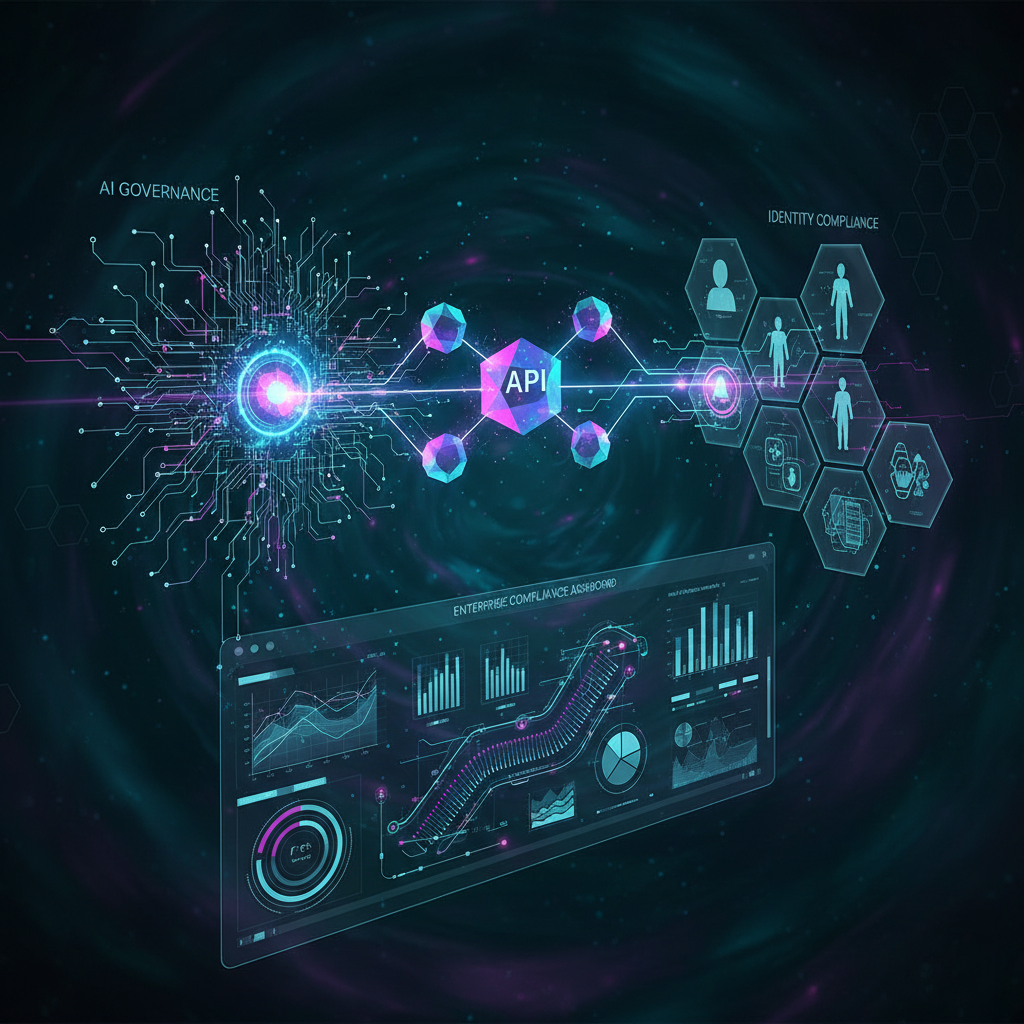
SailPoint’s integration with the Claude Compliance API marks a meaningful development in how AI governance and identity governance administration (IGA) are converging. As enterprises deploy AI systems at scale, the question of who — or what — has access to sensitive data and systems is becoming inseparable from the question of how AI behaviour is governed. SailPoint’s move positions IGA platforms as a critical layer in enterprise AI governance frameworks.
This integration matters because it addresses a gap that has emerged rapidly: as AI systems gain access to enterprise data, workflows, and APIs, existing identity governance frameworks lack the context to manage AI agent entitlements with the same rigour applied to human users.
The AI Governance and Identity Governance Intersection
AI agents present a novel identity governance challenge. Unlike human users, AI systems can operate continuously, across multiple systems simultaneously, at machine speed. Their access patterns do not conform to the human behavioural baselines that traditional IGA anomaly detection relies upon. And unlike service accounts, AI agents may require dynamic, context-sensitive access — entitlements that shift based on the task being performed.
The Claude Compliance API integration signals that SailPoint recognises this challenge and is building governance infrastructure to address it. By connecting AI compliance monitoring with identity governance workflows, enterprises gain visibility into what AI systems are accessing, under what conditions, and whether that access aligns with defined policy. This is identity lifecycle management extended to a new class of principal — the AI agent.
Practical Implications for IGA Programmes
For identity and security teams, the integration surfaces several practical capabilities. First, it enables AI agent access to be subject to the same certification and review processes applied to human and machine identities — ensuring that AI entitlements are regularly validated and appropriately scoped. Second, it creates an audit trail for AI system access, which is increasingly relevant as regulatory frameworks begin to address AI accountability.
Third, and most significantly, it establishes a governance boundary for AI agents: a mechanism to enforce least-privilege principles on systems that would otherwise accumulate access without constraint. Identity governance administration has always been about ensuring that access is appropriate, certified, and time-bounded. Applying these principles to AI agents is a natural extension — and an urgent one.
The Broader IGA Roadmap Implication
SailPoint’s Claude integration is part of a broader pattern: leading IGA platforms are repositioning as the governance layer for all identity types, not just human users. This encompasses service accounts, robotic process automation bots, API keys, and now AI agents. The identity governance perimeter is expanding, and platforms that fail to accommodate non-human identity types will find their relevance diminishing as AI adoption accelerates.
For enterprises building or refreshing their IGA strategy, the practical question is whether their chosen platform can govern AI agent access with the same depth and auditability applied to privileged human users. SailPoint’s integration with Claude’s compliance tooling suggests the answer is increasingly yes — and sets a benchmark for what comprehensive identity governance administration looks like in an AI-enabled enterprise.
Source: 디지털투데이