
Robotics Investment Puts Machine Identity at the Heart of Connected Operations
Corsha’s reported investment from Cybernetix Ventures underlines the security challenge emerging in robotics: every connected device, controller and software component needs a trustworthy machine identity. In industrial and autonomous environments, identity is not a background configuration. It determines whether a device can connect, which commands it can receive and how operators can investigate abnormal behaviour.
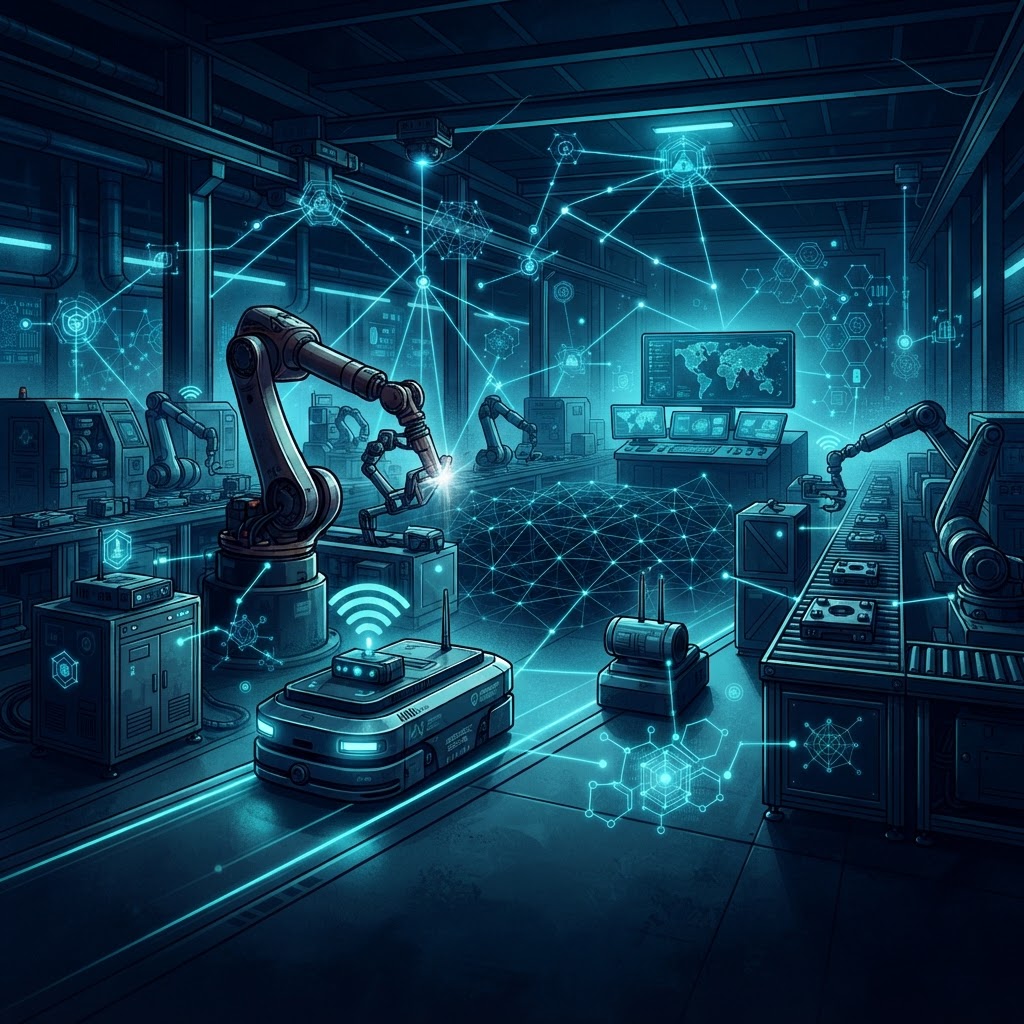
Robotics deployments bring together edge devices, cloud services, maintenance systems and third-party software. That ecosystem creates a dense non-human identity footprint, often operating in locations where direct human oversight is limited.
The operational problem
A robot may need to authenticate to a fleet platform, retrieve an updated task, exchange telemetry and request access to a physical process. If those connections rely on shared credentials or weak device records, an attacker who compromises one component may be able to impersonate another. The consequences can extend beyond data loss to unsafe movement, production disruption or damage to equipment.
Machine identity must therefore be tied to device provenance, lifecycle state and operational purpose. A newly installed controller should not automatically inherit the permissions of a retired one. Likewise, a device moved to a different site or assigned a new task may require a fresh policy decision.
Strong controls begin with cryptographic identity and mutual authentication, but they cannot stop there. Security teams need continuous visibility into which devices are active, which certificates or keys they use, and how those identities relate to applications and human operators. Expiry, rotation and revocation must work at the scale and availability requirements of industrial systems.
Applying NHI security to robotics
The most useful model treats each device and workload as a governed non-human identity. Owners should be recorded, permissions should be minimised and high-risk commands should require contextual checks. Telemetry should link a command to the originating device, software process, authorising policy and responsible operator.
This is also where Agentic Identity becomes relevant. Autonomous robots may make local decisions or coordinate with other systems, so the security model must distinguish between a device’s standing capability and the authority granted for a particular task. Short-lived credentials and task-scoped permissions reduce the impact of compromise.
For buyers, the investment signals that machine identity is becoming foundational infrastructure for connected operations. The right platform should support heterogeneous devices, offline or intermittent environments, certificate lifecycle management and clear evidence of every privileged action. Robotics security will increasingly depend on making machine trust visible, bounded and revocable.