
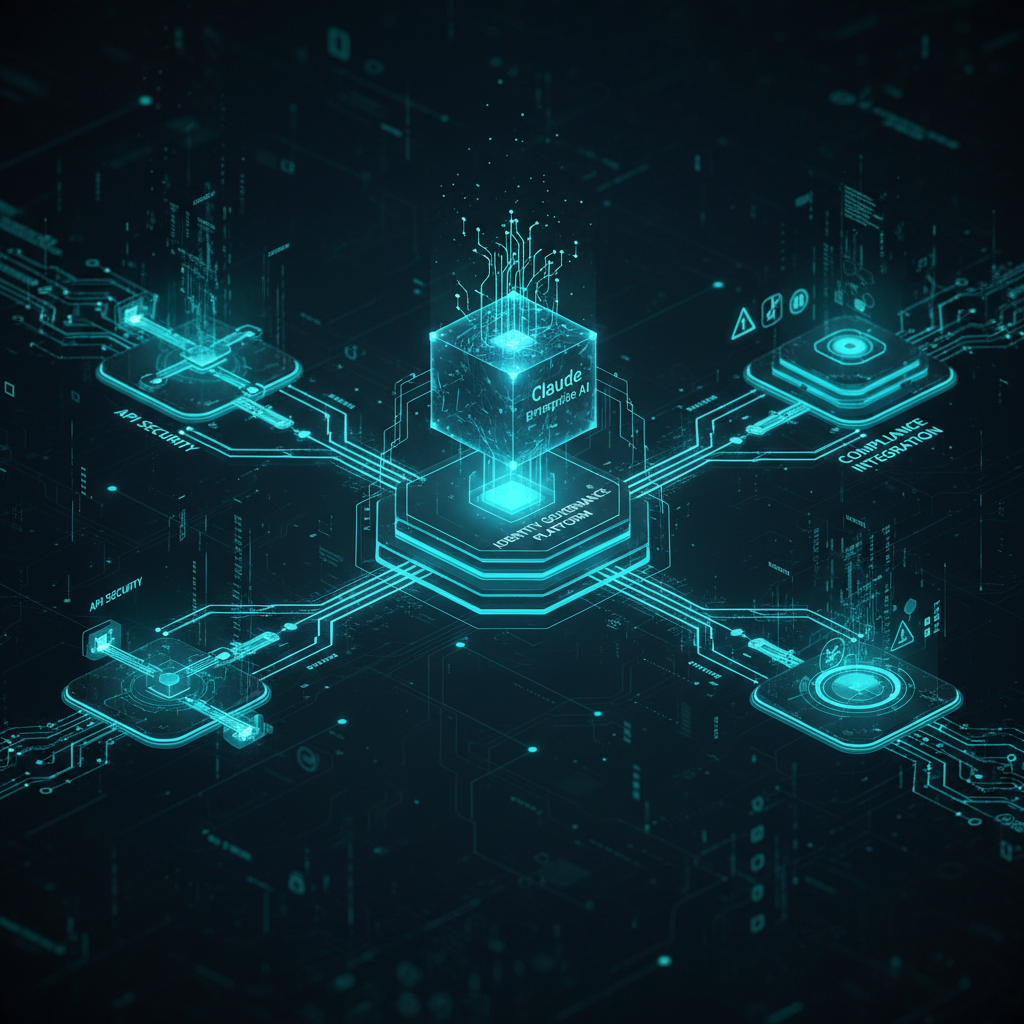
The convergence of enterprise AI and identity security is accelerating. As organisations deploy large language models and AI agents into production, identity governance becomes inseparable from AI governance. SailPoint’s integration with Claude Enterprise signals that leading identity governance and administration (IGA) platforms are positioning themselves as the governance layer for AI systems as much as for human users. This shift has critical implications for how enterprises think about identity infrastructure in an AI-augmented world.
For CISOs and identity teams, understanding this convergence is essential to making forward-looking platform decisions.
The AI Agent Identity Challenge
AI systems — whether large language models, autonomous agents, or machine learning pipelines — require access to enterprise data, APIs, and applications. Unlike human users whose behaviour has identifiable patterns, AI systems can exhibit unexpected access patterns. Their access needs evolve rapidly as models and applications change. And without proper governance, their entitlements accumulate unchecked.
Traditional identity governance frameworks were not built for AI agent principals. Access certification processes assume human decision-makers reviewing entitlements. Role-based access control assumes stable role definitions. Least-privilege enforcement assumes entitlements change infrequently. None of these assumptions hold for AI agents.
Claude Enterprise — Anthropic’s enterprise-grade large language model — integrates with enterprise systems through APIs that require identity credentials. When those credentials are provisioned, certified, and revoked, they need governance. SailPoint’s integration with Claude Enterprise signals that leading IGA platforms are beginning to address this challenge: treating AI agent access as a first-class identity governance problem, not an afterthought.
How Enterprise AI Governance Intersects with IGA
The intersection of Claude integration and identity governance creates several practical capabilities. First, AI agent access can be subject to the same access certification processes applied to human and service accounts: regular review, attestation, and revocation of unused entitlements.
Second, AI agent credentials can be subject to temporal scoping: credentials that are valid only during specific time windows or for specific tasks, reducing the blast radius if a credential is leaked. Third, AI agent API usage can be subject to rate limits and quota enforcement, preventing runaway credential consumption.
Fourth, and most significantly, AI governance becomes visible to the broader identity security programme. Instead of AI agent credentials being managed by data science teams in isolation, they become part of the enterprise identity estate and subject to the same compliance, audit, and remediation workflows applied to all principals.
Broader Implications for Identity Governance Administration
SailPoint’s Claude integration is part of a strategic repositioning: making IGA platforms the governance layer for all principals, not just human users. This encompasses service accounts, robotic process automation bots, API keys, database credentials, and AI agents. The identity governance perimeter is expanding simultaneously with the attack surface — and platforms that fail to expand their governance scope will become increasingly irrelevant.
For organisations building or refreshing their IGA strategy, this integration is a signal to prioritise platforms that can govern AI agent identity with the same depth and auditability applied to privileged human users. Claude Enterprise is just the beginning — as AI adoption accelerates, the ability to govern AI principal access will become foundational.
Source: SecurityBrief Australia