
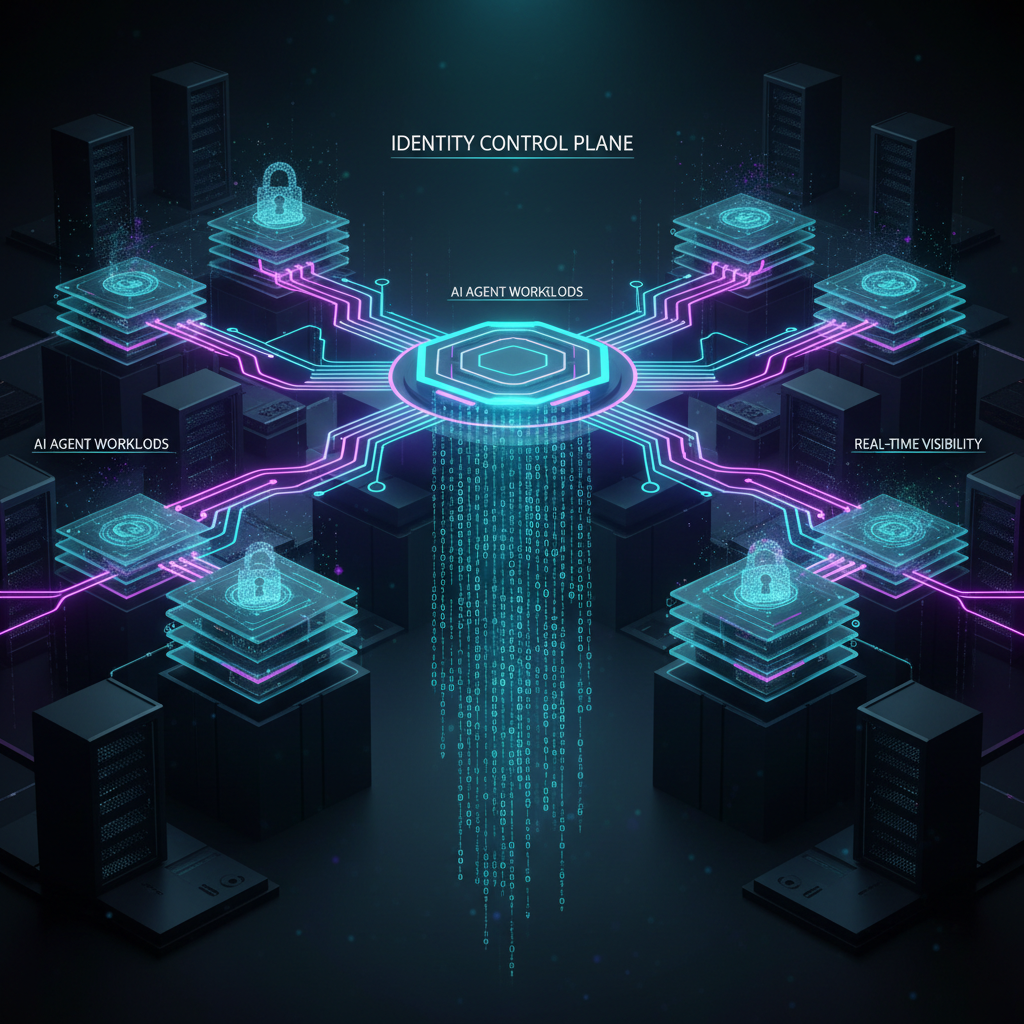
Orchid Security’s decision to extend identity control plane capabilities specifically for AI agents marks a turning point in how enterprises approach agentic workload security. The traditional identity and access management (IAM) stack was designed assuming identity equals human—with persistent sessions, predictable access patterns, and defined role boundaries. AI agents shatter these assumptions. They operate asynchronously, scale horizontally across thousands of instances, assume multiple identities within seconds, and make programmatic decisions that can affect the entire data plane.
The control plane problem is distinct from the data plane problem. Kubernetes and cloud-native platforms solved how to manage compute resources at scale. But managing the identities that those compute resources assume—and verifying their legitimacy in real time—requires a different architectural approach. Orchid’s extension adds explicit hooks for continuous identity verification, cryptographic binding of agent code to identity assertions, and runtime enforcement of identity-based access boundaries that can adapt without service restarts.
One critical capability is multi-identity orchestration. A single AI agent might need to authenticate as different service principals depending on the task—one identity for database access, another for API calls, a third for log ingestion. Traditional IAM requires pre-configuring all these relationships. Orchid’s control plane allows agents to request and receive ephemeral identity tokens bound to specific actions, reducing the blast radius if any single credential is compromised. This is different from short-lived OAuth tokens; these are zero-knowledge proofs of identity that work across disconnected services.
The visibility problem becomes crucial at scale. When you have dozens of AI agents making millions of API calls daily, you need observability that goes beyond audit logs. Orchid’s approach includes continuous identity streams—real-time feeds of identity assertions, token issuance events, and permission decisions that can be analyzed for anomalies. Security teams can see when an agent is behaving outside its learned normal patterns before damage occurs.
The practical implication is that organizations deploying production AI agents now have infrastructure-level tools to prevent privilege escalation, lateral movement, and credential compromise. Rather than relying solely on application-layer validation, the control plane enforces identity boundaries at the infrastructure level—where agents can’t be modified by misconfigured prompts or jailbreak attempts.
Source: SC Media