
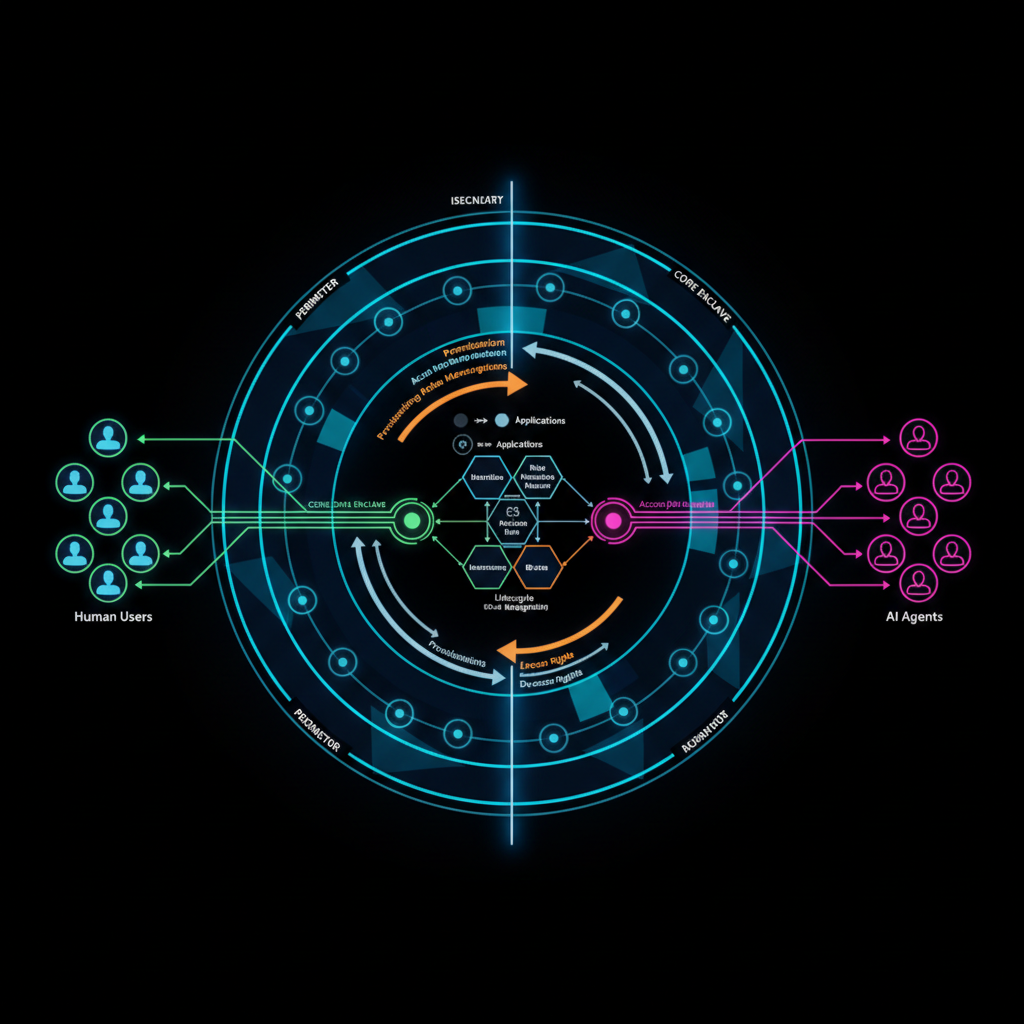
SailPoint’s latest expansion into AI agent governance marks a significant inflection point in identity and access management. The company, traditionally focused on managing human user lifecycles, has extended its core identity governance platform to address the emerging challenge of agentic identities operating autonomously across enterprise infrastructure.
The Scope Creep Problem
AI agents don’t follow the traditional hire-to-retire lifecycle of human employees. They spin up dynamically, scale horizontally, and can spawn child agents with inherited permissions. Traditional IGA solutions, built around provisioning and deprovisioning individual human identities, struggle to model and control these complex agentic hierarchies. SailPoint’s extension acknowledges that the same governance principles—identity lifecycle, access reviews, segregation of duties—must be reimagined for machines.
Key Capabilities for Agent Management
SailPoint’s agent-focused enhancements include:
- Agent Provisioning Workflows: Automated deployment of agents with pre-defined access boundaries
- Behavioral Baselines: Machine learning models that detect abnormal agent behavior and trigger policy reviews
- Agent Attestation: Periodic reviews confirming that agent permissions remain justified and aligned with business purpose
- Cross-Agent Dependencies: Mapping and controlling permission inheritance chains when agents spawn child agents
The Broader Trend
SailPoint’s move signals that enterprise identity governance is bifurcating. One stream remains focused on human workforce management. The other—larger and faster-growing—is coalescing around non-human identity orchestration. Organizations that don’t explicitly extend their IGA practice to agents risk creating a shadow identity sprawl that no governance framework can see or control.
Source: TechInformed