
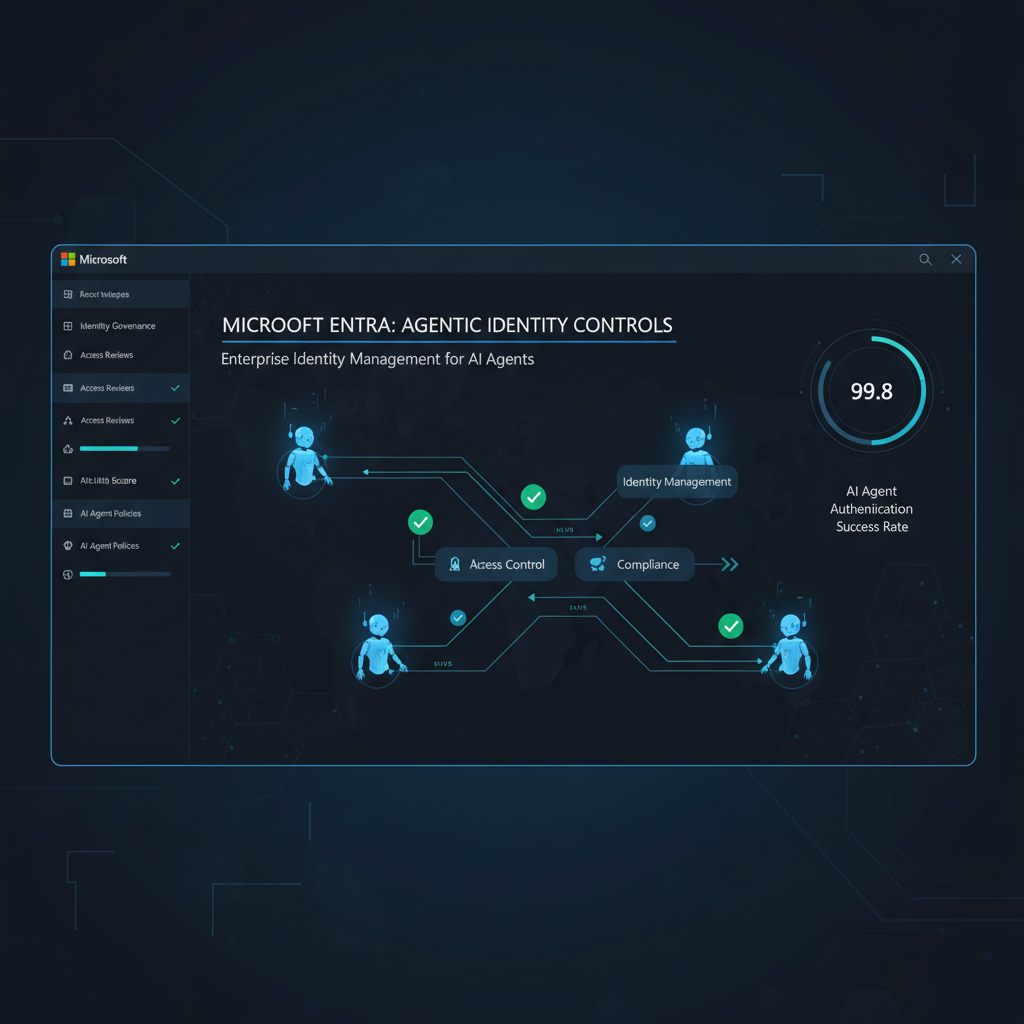
Microsofts updates to Entra ID (formerly Azure AD) represent a significant industry shift: cloud identity platforms are beginning to acknowledge that AI agents require different governance models than human users. These updates signal that machine identity is no longer an afterthought in enterprise identity management — it is a core platform requirement.
The challenge for platforms like Entra is fundamental. They were built to manage human identities: individual users, delegated administrative access, role-based permissions tied to job functions. Extending these platforms to support AI agents requires rethinking the core assumptions about what identity means, how permissions are expressed, and how governance is enforced.
The Platforms Dilemma: One Model Does Not Fit All
Entra ID has invested heavily in human identity abstractions: users with email addresses, roles tied to organizational structure, Conditional Access policies that evaluate context (location, device, risk score). These make sense for humans. But an AI agent does not have an email address. Its organizational membership is a label in a YAML file. Its “device” is ephemeral — it might not exist ten minutes from now.
Microsofts update acknowledges this by introducing service principal configurations and workload identity federation that allow machine identities to be treated as first-class citizens in the platform. This is not a minor feature — it is a recognition that enterprise IAM platforms must now support two distinct identity classes, each with different semantics and governance requirements.
Agentic Identity Governance at Enterprise Scale
What does it mean to govern a machine identity in Entra? Traditional governance assumes that a manager reviews who has what access, once per year. For a machine identity that might be instantiated or modified daily, continuous governance becomes necessary. Microsofts updates introduce automated certification workflows, federated identity for AI workloads, and policy-driven access controls — primitives that allow organizations to express intent declaratively rather than operationally.
Furthermore, Entras integration with workload identity federation allows organizations to bring their own certificate providers, not just cloud-hosted secrets. This is a smart design decision: it acknowledges that many organizations will maintain private PKI for machine identity, and the platform should support that rather than forcing all credentials through its own secret store.
The Convergence of Cloud Platforms and NHI Security
Microsofts moves are not isolated. Okta, AWS IAM, Google Cloud Identity, and others are all developing machine identity-specific features. What this signals is the beginning of a fundamental shift in how cloud platforms think about identity governance.
Where cloud platforms lead, enterprises follow. As Entra ID and other major platforms add agentic identity capabilities, organizations will begin to expect those capabilities as table stakes. Identity teams that have not begun planning for machine identity governance will find themselves behind — unable to meet compliance requirements for AI agent access, unable to implement least-privilege principles, unable to audit what their agents are actually doing.
The window to build agentic identity capabilities is now. Organizations that treat NHI security as a core strategic initiative today will have the infrastructure and expertise in place when it becomes table stakes tomorrow.
Source: Lets Data Science