
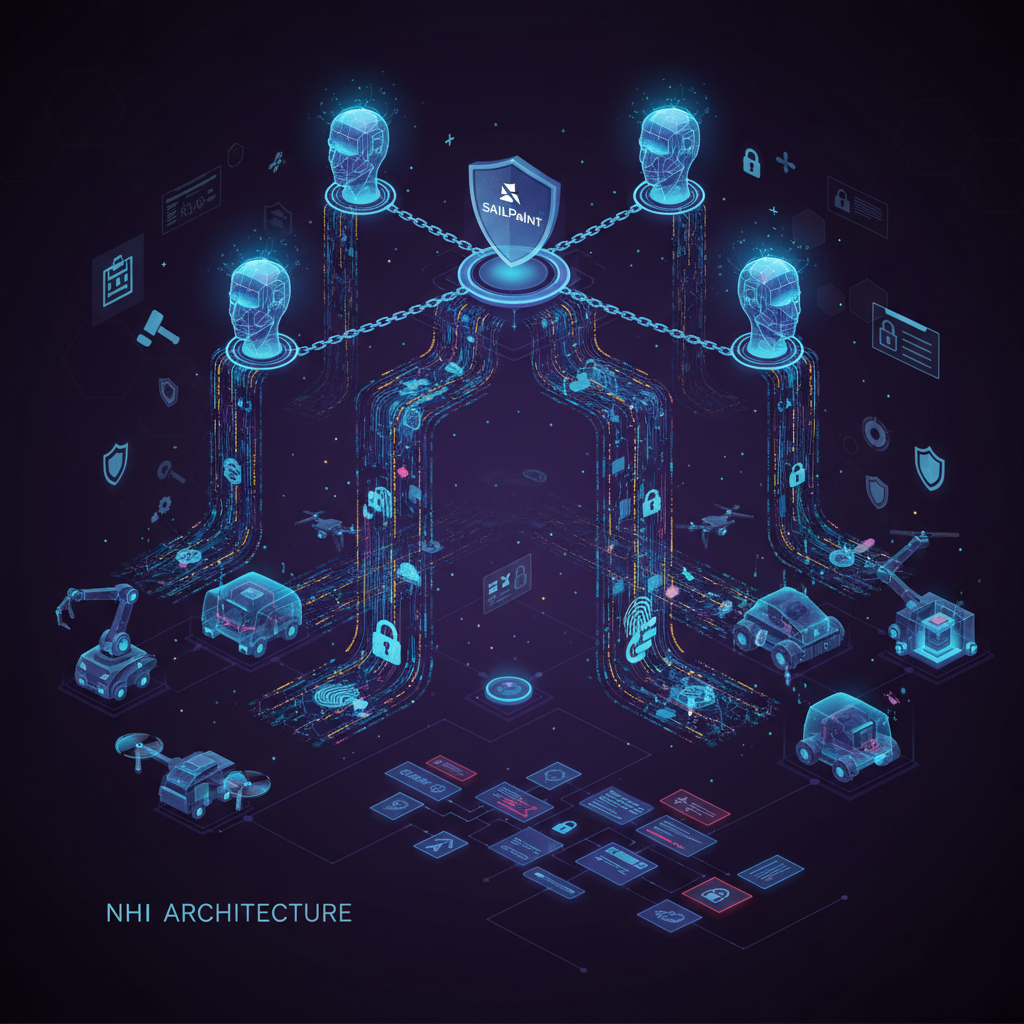
SailPoint’s latest governance extension represents a watershed moment for enterprise identity management: the industry’s leading identity governance platform is now explicitly acknowledging that AI agents require purpose-built governance controls that traditional IAM cannot provide. This shift signals that the market has reached a critical inflection point where agentic workloads are no longer a niche consideration but a core enterprise security requirement.
From Human Governance to Autonomous Control
For decades, identity governance meant ensuring humans had the right access, at the right time, to the right systems. SailPoint built its dominance on that premise: comprehensive visibility into who accessed what, detailed audit trails, and policy frameworks designed around human role hierarchies. But AI agents don’t fit this model. They don’t request access. They exercise permissions continuously, at machine velocity, in contexts that shift faster than human policy makers can react.
SailPoint’s extension of governance to agents acknowledges this reality. The platform now needs to answer questions like: Should this agent be allowed to call this API with these parameters right now? Is this agent’s behavior within expected operational bounds? If an agent’s privileges are suddenly escalated, should that trigger an investigation? These questions require governance mechanisms that operate at machine speed and machine scale, not the quarterly access reviews and annual recertification cycles that define traditional machine identity governance.
The Governance Gap in NHI Security
Many organizations treat agent governance as an afterthought. They provision credentials, set permissions, and assume static controls suffice. But agents are not static. They learn, they adapt, they respond to environmental changes. An agent that successfully executed a query this morning might attempt a different query this afternoon based on new training data or dynamic instructions. Governance frameworks designed for humans assume identity and intent are stable. For agents, both are fluid.
SailPoint’s extension directly addresses this gap. By extending governance to agents, the platform shifts from “did someone access this?” to “did this autonomous entity behave as intended?” That’s a fundamentally different security question, and it requires different tools—behavioral analysis, anomaly detection, runtime constraint enforcement, and the ability to revoke permissions instantly if an agent’s actions diverge from policy.
The Broader Implication: NHI Governance Becomes Mandatory
When a market leader like SailPoint extends its core platform to agents, it’s not a product update—it’s a market signal. It means governance for Agentic Identity is no longer optional. Organizations that have been treating agentic workloads as “just service accounts” will need to rethink their approach. Machine identity governance is moving from a technical nice-to-have to a compliance and operational necessity.
For enterprises with complex agent deployments—multiple models, multiple teams, multiple cloud environments—the governance challenge is multiplicative. SailPoint’s extension provides a framework to centralize that governance, but only if organizations adopt it seriously. NHI security at scale demands the same rigor traditional IAM brought to human identity. SailPoint’s move makes that rigor possible. The question is whether enterprises will treat it as essential or optional.
Source: TechInformed