
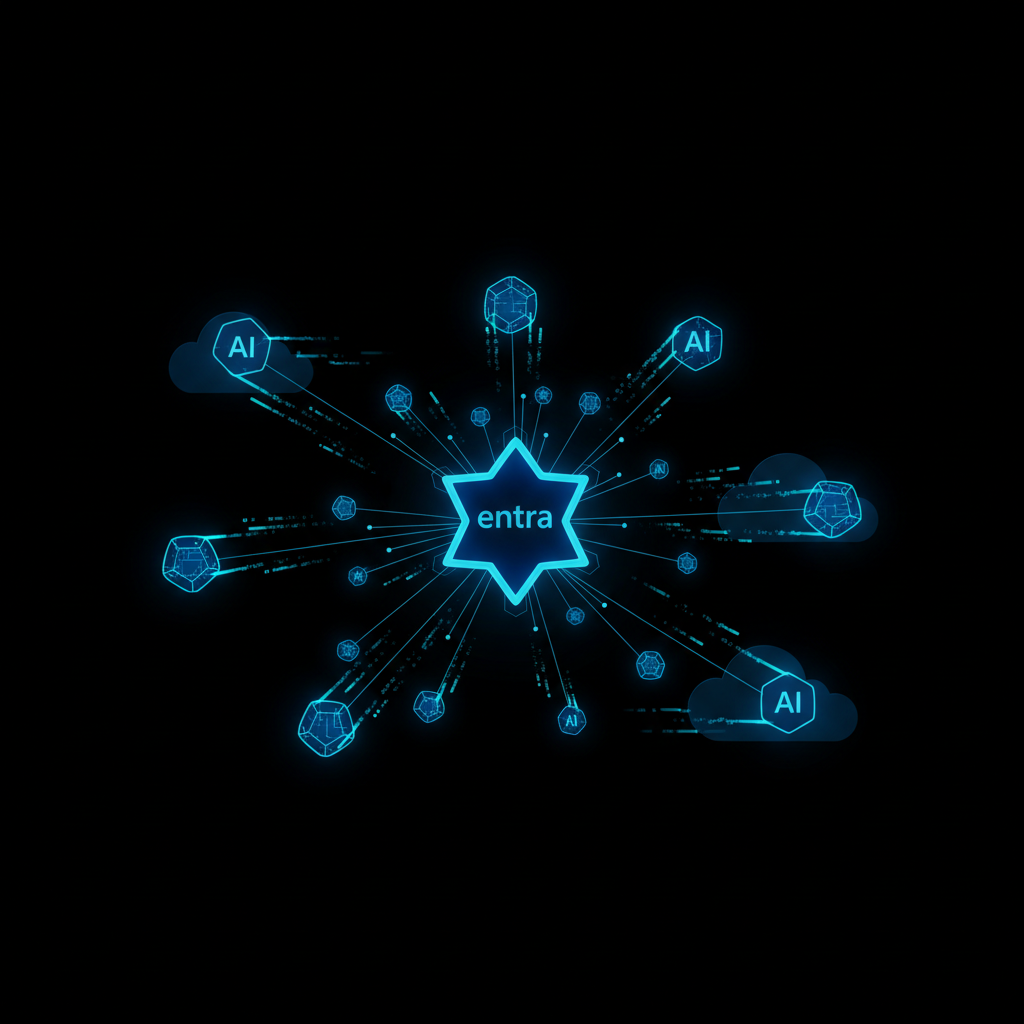
Microsoft’s updates to Entra for AI agent identity management represent one of the clearest signals yet that the major identity platform vendors are taking non-human identity seriously. When a platform with Entra’s enterprise footprint ships dedicated AI agent identity capabilities, it fundamentally changes what security teams can expect as a baseline from their identity infrastructure — and raises the bar for what constitutes acceptable NHI governance.
Understanding what Microsoft has built — and more importantly, what problems it’s designed to solve — is essential for any IAM practitioner currently navigating the AI agent security challenge.
The AI Agent Identity Gap in Enterprise IAM
Traditional enterprise identity platforms were built for humans and, to a lesser extent, service accounts and applications. AI agents don’t fit cleanly into either category. They are more autonomous than applications, more dynamic than service accounts, and capable of operating across system boundaries in ways that human identities never could. The result has been a governance gap — AI agents operating within enterprises without the same visibility, lifecycle controls, or access governance that human identities receive as standard.
What Entra’s AI Agent Capabilities Address
Identity for autonomous agents: Microsoft’s approach treats AI agents as first-class identity principals — entities with their own credentials, permissions, and audit trails rather than extensions of human user accounts. This is the correct architectural foundation for machine identity governance at scale.
Scoped, task-specific permissions: Effective Agentic Identity management requires that AI agents receive only the permissions necessary for specific tasks, with automatic revocation upon completion. Entra’s updates move in this direction, enabling more granular, time-bound access controls for autonomous workloads.
Cross-system visibility: One of the most persistent NHI security challenges is that machine identities frequently operate across multiple systems, with each system maintaining its own identity records. Centralised visibility across these boundaries — knowing what an AI agent has access to across the entire enterprise estate — is fundamental to effective governance.
Audit and accountability: When an AI agent takes an action, who is accountable? Microsoft’s approach to agent identity includes the audit trail capabilities necessary to answer this question — mapping agent actions back to the humans and applications that authorised them.
For security leaders, Microsoft’s direction on AI agent identity in Entra sets a new benchmark. Organisations already invested in the Microsoft security stack should be actively exploring how these capabilities apply to their AI agent deployments. Those on other identity platforms should use this as a prompt to assess whether their current vendor has a credible roadmap for machine identity and agentic security.